Dr. Karthik Raghuram is a skilled Interventional Cardiologist providing advanced, compassionate, and evidence-based heart care focused on accurate diagnosis and effective treatment.

Consultant - Interventional Cardiologist
(Gold Medalist & Top-Ranked NEET PG Cardiologist)
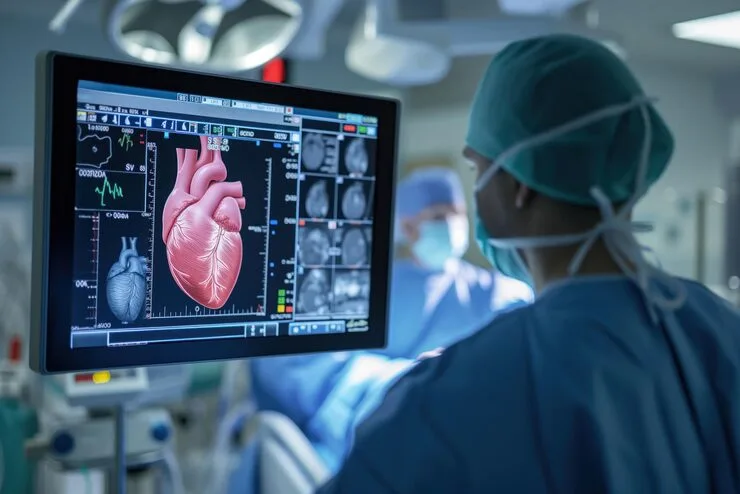
A Cardiac CT Scan, also known as CT Coronary Angiography (CTCA), is a highly advanced, non-invasive imaging test that uses computed tomography (CT) technology to capture detailed pictures of the heart and its blood vessels. It helps detect blockages, plaque buildup, structural abnormalities, and early signs of coronary artery disease without the need for invasive procedures. Under the expert guidance of Dr. Karthik Raghuram, patients receive accurate imaging and expert interpretation to assess heart health and plan appropriate treatment.
A Cardiac CT Scan provides clear and high-resolution images of the coronary arteries. It is especially useful for:
Detecting early plaque buildup and blockages
Evaluating chest pain when ECG or TMT results are inconclusive
Assessing risk of heart attack
Screening for coronary artery disease in high-risk individuals
Understanding heart anatomy before angioplasty or surgery
Detecting congenital heart abnormalities
It offers early diagnosis, allowing timely treatment and prevention.
You may require a Cardiac CT Scan if you experience:
Chest pain or discomfort
Unexplained breathlessness
Irregular heartbeats
Fatigue on exertion
Atypical symptoms with unclear cause
It is also recommended for individuals who have:
Diabetes
High blood pressure
High cholesterol
Family history of heart disease
Abnormal ECG, Echo, or TMT results
Smoking history
A cardiac CT scan helps identify heart disease even before symptoms become severe.
The scan is simple, fast, and completely non-invasive:
You lie on a scanning table
ECG leads are placed to synchronize imaging with heartbeats
The CT scanner rotates around the chest, capturing multiple images
A contrast dye may be used to highlight blood vessels
The procedure typically takes 10–20 minutes
There is no pain and minimal recovery time
Dr. Karthik ensures clear instructions and complete comfort throughout the process.
Visualizes coronary arteries to detect blockages and plaque.
Measures calcium buildup in arteries to predict risk of heart attack.
Provides detailed images of heart structure for diagnosis and planning.
Evaluates the pumping ability of the heart.
Each type is recommended based on the patient’s condition and diagnostic needs.
A cardiac CT scan can detect:
Coronary artery disease
Plaque buildup (soft or calcified)
Narrowing of arteries
Congenital heart defects
Aortic diseases
Heart muscle abnormalities
Pericardial disease
Bypass graft or stent assessment (in selected cases)
It is one of the most effective early screening tools for heart disease.
Non-invasive alternative to traditional angiography
High accuracy and rapid results
Clear 3D heart visuals
Early disease detection before symptoms worsen
Helps plan treatment such as medication, stenting, or lifestyle changes
Expert interpretation by an experienced cardiologist
Seek urgent medical attention if you experience:
Severe chest pain
Sudden breathlessness
Fainting
Rapid or irregular heartbeat
Severe dizziness
These may indicate a cardiac emergency that requires prompt testing.
A Cardiac CT Scan is one of the most advanced ways to evaluate heart health early and accurately. Schedule your scan with Dr. Karthik Raghuram to receive detailed imaging, expert interpretation, and personalised guidance for the next steps in your heart care.

Dr. Karthik Raghuram is a skilled Interventional Cardiologist providing advanced, compassionate, and evidence-based heart care focused on accurate diagnosis and effective treatment.
Copyright @2025 Dr. Karthik Raghuram. All rights reserved. Designed by AppAdd India Pvt Ltd.