Dr. Karthik Raghuram is a skilled Interventional Cardiologist providing advanced, compassionate, and evidence-based heart care focused on accurate diagnosis and effective treatment.

Consultant - Interventional Cardiologist
(Gold Medalist & Top-Ranked NEET PG Cardiologist)
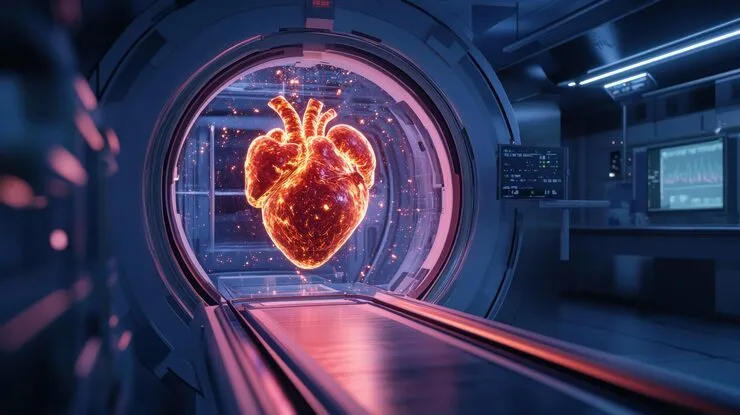
A Cardiac MRI (Magnetic Resonance Imaging) is a highly advanced, non-invasive imaging test that uses magnetic fields and radio waves to produce detailed, high-resolution images of the heart. It shows the heart’s structure, muscle function, blood flow, and tissue characteristics with exceptional clarity. Under the expert guidance of Dr. Karthik Raghuram, Cardiac MRI is used to diagnose complex heart conditions, assess disease severity, and guide precise treatment plans.
Cardiac MRI provides information that other tests like ECG, Echo, or CT scan may not fully reveal. It is especially valuable for:
Evaluating heart muscle damage
Diagnosing cardiomyopathies
Detecting inflammation or scarring
Assessing congenital heart disease
Measuring heart chamber size and function
Evaluating blood flow and valve performance
Planning surgeries or advanced interventions
Its accuracy makes it a gold-standard imaging tool in modern cardiology.
A Cardiac MRI is recommended if you have:
Unexplained chest pain
Irregular heartbeat (arrhythmia)
Suspected heart muscle weakness
History of heart attack
Congenital heart abnormalities
Heart valve disease
Previous unexplained fainting episodes
Abnormalities detected in Echo or CT scan
It is also used to follow up on conditions like heart failure, myocarditis, sarcoidosis, and cardiomyopathies.
Cardiac MRI is safe, non-invasive, and highly detailed:
You lie in a large MRI scanner
ECG leads may be attached to time the images with your heartbeat
A contrast dye may be used to enhance clarity
The scanner captures images over 30–60 minutes
There is no radiation exposure
The procedure is painless, though lying still is required
Dr. Karthik ensures complete comfort, clear instructions, and accurate interpretation of results.
Shows heart chambers, muscle thickness, and pumping function.
Evaluates blood flow to the heart muscle.
Identifies scar tissue and assesses whether damaged heart muscle can recover.
Provides detailed imaging for structural abnormalities present from birth.
Evaluates diseases of the aorta, including aneurysms and dissections.
Each type of MRI is selected based on the patient’s condition and clinical requirements.
Cardiac MRI helps diagnose:
Cardiomyopathy (dilated, hypertrophic, restrictive)
Myocarditis and inflammation
Heart attacks and scar tissue
Congenital heart disease
Valve abnormalities
Pericardial disease
Aortic conditions
Pulmonary hypertension
Right and left ventricular dysfunction
It offers some of the most precise cardiac data available in medicine.
Patients benefit from:
Extremely detailed heart imaging
Radiation-free, safe technology
Accurate diagnosis of complex heart conditions
Guidance for advanced treatments like angioplasty or surgery
Monitoring disease progression and treatment response
Expertise in interpreting subtle MRI findings
Seek urgent care if you experience:
Sudden chest pain
Severe shortness of breath
Fainting episodes
Rapid or irregular heartbeat
Symptoms of heart failure
These signs may require immediate investigation.
A Cardiac MRI provides unmatched insight into your heart health. Schedule your Cardiac MRI evaluation with Dr. Karthik Raghuram for expert interpretation, personalised treatment planning, and advanced cardiac care.

Dr. Karthik Raghuram is a skilled Interventional Cardiologist providing advanced, compassionate, and evidence-based heart care focused on accurate diagnosis and effective treatment.
Copyright @2025 Dr. Karthik Raghuram. All rights reserved. Designed by AppAdd India Pvt Ltd.