Dr. Karthik Raghuram is a skilled Interventional Cardiologist providing advanced, compassionate, and evidence-based heart care focused on accurate diagnosis and effective treatment.

Consultant - Interventional Cardiologist
(Gold Medalist & Top-Ranked NEET PG Cardiologist)
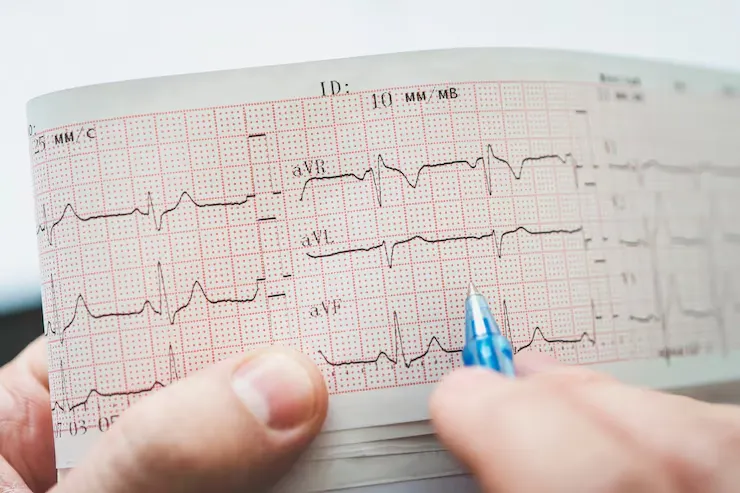
An Electrocardiogram (ECG) is a simple, quick, and painless test that measures the electrical activity of the heart. It helps detect abnormalities in heart rhythm, rate, and structure. As one of the most commonly used cardiac diagnostic tools, an ECG provides essential information for identifying conditions such as arrhythmias, heart attacks, and other heart-related issues. Under the care of Dr. Karthik Raghuram, patients receive highly accurate ECG interpretation and guidance based on results.
The heart generates electrical signals that control each heartbeat. When these signals become abnormal, it can indicate underlying problems. An ECG helps:
Diagnose irregular heart rhythms
Detect signs of heart attack or previous cardiac damage
Identify abnormalities in heart size
Evaluate chest pain or palpitations
Monitor the effects of medications
Assess heart health before surgery
Early detection through ECG can prevent serious complications.
You may require an ECG if you experience:
Chest pain or discomfort
Palpitations or fluttering sensation
Shortness of breath
Dizziness or fainting
Fatigue and reduced stamina
High blood pressure
Unexplained anxiety episodes
ECG is also recommended for individuals with:
Diabetes
High cholesterol
Family history of heart disease
History of smoking
Ongoing cardiac treatment
Regular ECG monitoring is essential for patients with known heart conditions.
An ECG is a quick and non-invasive test performed as follows:
Electrodes are placed on the chest, arms, and legs
The machine records the heart’s electrical activity
The process takes 2–5 minutes
There is no pain, discomfort, or recovery time required
Dr. Karthik ensures accurate readings by correlating ECG findings with symptoms and clinical history.
Depending on the patient’s condition, different ECG types may be used:
Standard test performed while the patient lies still.
Measures heart activity during exercise to detect blockages.
Continuous ECG recording to identify intermittent arrhythmias.
Used for long-term evaluation of occasional abnormal heartbeats.
Each test is chosen based on the patient’s symptoms and diagnostic needs.
An Electrocardiogram can help diagnose:
Atrial fibrillation and other arrhythmias
Heart attack (current or previous)
Coronary artery blockage indicators
Electrolyte imbalances
Pericarditis (inflammation around the heart)
Enlargement of heart chambers
Conduction abnormalities
An ECG is often the first step to identify heart issues quickly and accurately.
Patients benefit from:
Accurate interpretation by an experienced cardiologist
Quick diagnosis and treatment decision
Early detection of life-threatening conditions
Access to further cardiac evaluation if needed
Personalised care based on ECG results
Seek urgent ECG testing if you experience:
Sudden chest pain
Severe breathlessness
Rapid or irregular heartbeat
Dizziness or fainting
Pain spreading to arm, neck, or jaw
These may indicate a cardiac emergency.
An ECG is one of the fastest ways to understand your heart health. Schedule your Electrocardiogram (ECG) test with Dr. Karthik Raghuram for accurate diagnosis, quick reporting, and expert guidance for the next steps.

Dr. Karthik Raghuram is a skilled Interventional Cardiologist providing advanced, compassionate, and evidence-based heart care focused on accurate diagnosis and effective treatment.
Copyright @2025 Dr. Karthik Raghuram. All rights reserved. Designed by AppAdd India Pvt Ltd.